
SHOWERS & CELEBRATIONS
How to Host a Shower at a Restaurant
You volunteered to plan this. Here is how to make it beautiful without making it your second job.
You said yes. Maybe you are the maid of honor, the best friend, the sister, or the colleague who raised their hand when someone asked "so who is planning the shower?" Now you have a date to work toward, a guest list forming in a group chat, a budget that three or four people are splitting, and a guest of honor whose taste you want to match but whose preferences you may not know in detail.
This is one of the most personal events you will ever plan for someone else. The pressure is real. You want the room to look right, the food to be good, the timing to feel relaxed, and the guest of honor to walk in and think: someone put thought into this.
A restaurant private room takes most of the logistics off your plate. The space has character. The table is set when you arrive. The food and drinks are handled by professionals. You do not need to rent chairs, hire a bartender, arrange catering, or clean up afterward. You show up with the flowers and the cake. The restaurant handles the rest. Your job becomes being present for the person you are celebrating, not running a production.

EVERY KIND OF SHOWER
It Is Not One Format Anymore
The word "shower" used to mean one thing: a daytime party in someone's living room with finger sandwiches, gifts in a pile, and a game involving clothespins. That version still exists. But the format has expanded, and so have the reasons people throw them.
Bridal showers
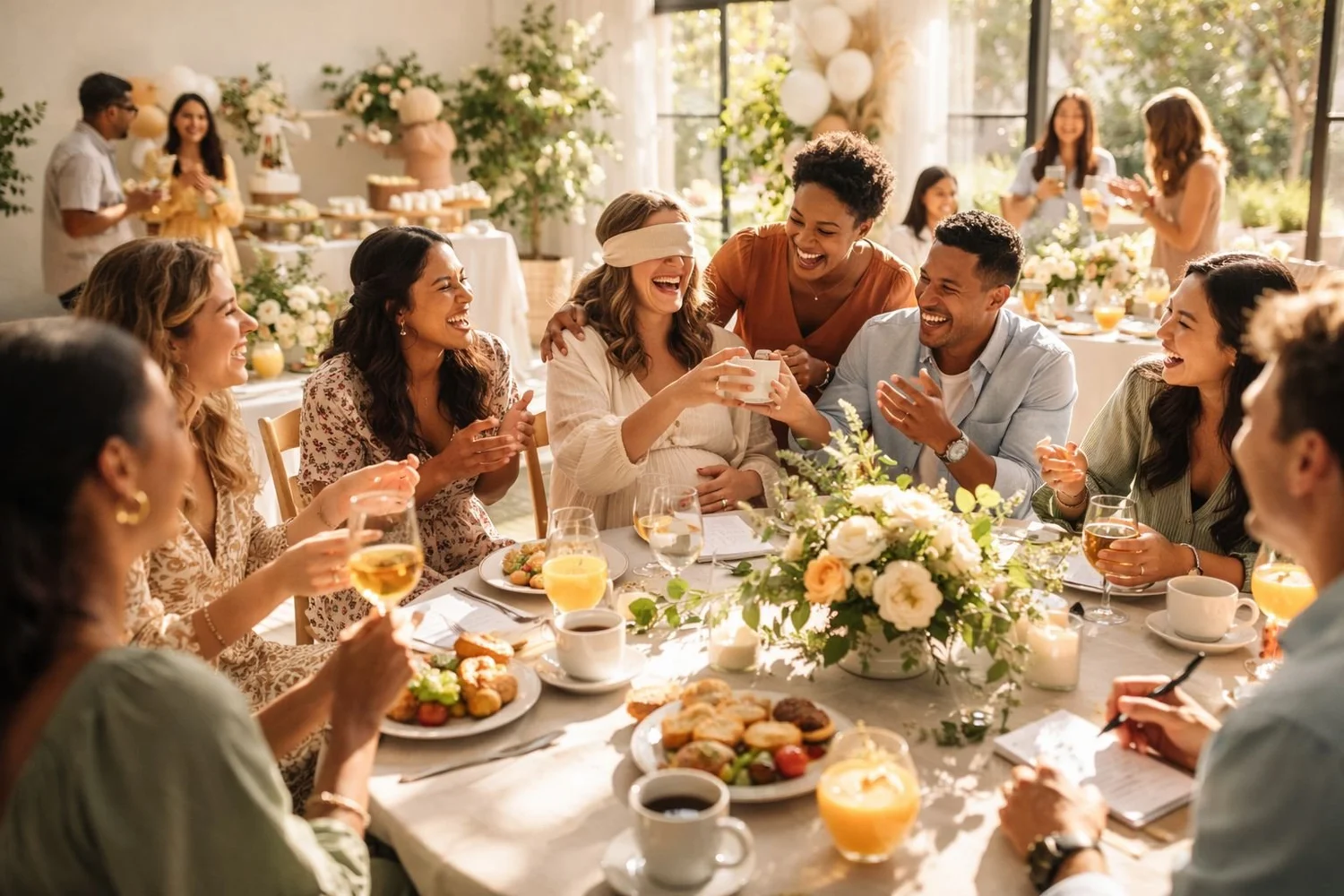
The original. Typically hosted by the maid of honor, bridesmaids, or the bride's close friends and family. Usually 15 to 30 guests, almost always daytime, often brunch or afternoon tea format. The venue should feel polished without feeling stiff. Natural light matters enormously because every guest will be taking photos. A private room with a long table, fresh flowers, and a brunch menu handles 90% of the vision most hosts are going for.
Couples showers
Co-ed and increasingly the norm. Both partners are celebrated. The guest list is the couple's shared circle, not just the bride's. The format is usually a dinner or cocktail hour rather than a daytime brunch, and the tone skews more social and less traditional. A restaurant with a private room and a good cocktail program is the natural fit. No games, no gift-opening ceremony. A really good dinner with the people who matter.
Baby showers
Hosted by friends, family, or colleagues for an expecting parent or parents. Group sizes range from 10 to 40. The format is almost always daytime: brunch, lunch, or afternoon. Two things make a restaurant the right choice for a baby shower. First, the guest of honor is often physically uncomfortable by the time the shower happens (typically 28 to 34 weeks), and being a guest at their own party instead of hosting at home is a relief. Second, the host avoids the nightmare of setting up and cleaning while simultaneously entertaining.
Sprinkles
A smaller, lighter celebration for a second or third child. The name signals that this is not the full production of a first baby shower. The guest list is tighter, the gifts are optional, and the format is casual. A brunch for 8 to 15 people in a private room is the perfect scale. The group eats, celebrates, and goes home. Two hours is the sweet spot.
Sip and see
A post-birth gathering where guests meet the baby for the first time. The name comes from the format: guests sip (drinks) and see (the baby). These are quieter, more intimate, and shorter than a traditional shower. A private room at a restaurant with afternoon tea or light appetizers works well. The key requirement is a space where a stroller fits comfortably and the noise level is manageable for a newborn.
Adoption showers
Celebrating a family that is growing through adoption. The format mirrors a baby shower but the timing is different. Adoption timelines are less predictable than pregnancy timelines, so the shower might happen before or after the child arrives. A restaurant makes this easier because you are not committing to a specific home setup weeks in advance. Book the room when the timing is right, and the venue handles the rest.
Retirement celebrations
Not always called a "shower," but the format is the same: a group gathers to honor someone entering a new chapter. A lunch or dinner in a private room, a few toasts, maybe a small gift. These work particularly well at restaurants because the guest of honor gets to enjoy a proper meal in a space that feels chosen for them, not squeezed into a conference room during lunch hour.
Graduation and going-away gatherings
A close group celebrating someone who is moving, graduating, or starting something new. The format is flexible: brunch, dinner, cocktails. The unifying thread is that the guest list is curated (not an open invitation) and the event has an emotional center. A private room matches the intimacy of the occasion in a way that a house party or a restaurant floor table cannot.
The best showers feel like the host chose every detail on purpose. A restaurant private room gives you that feeling without requiring you to actually choose every detail yourself.
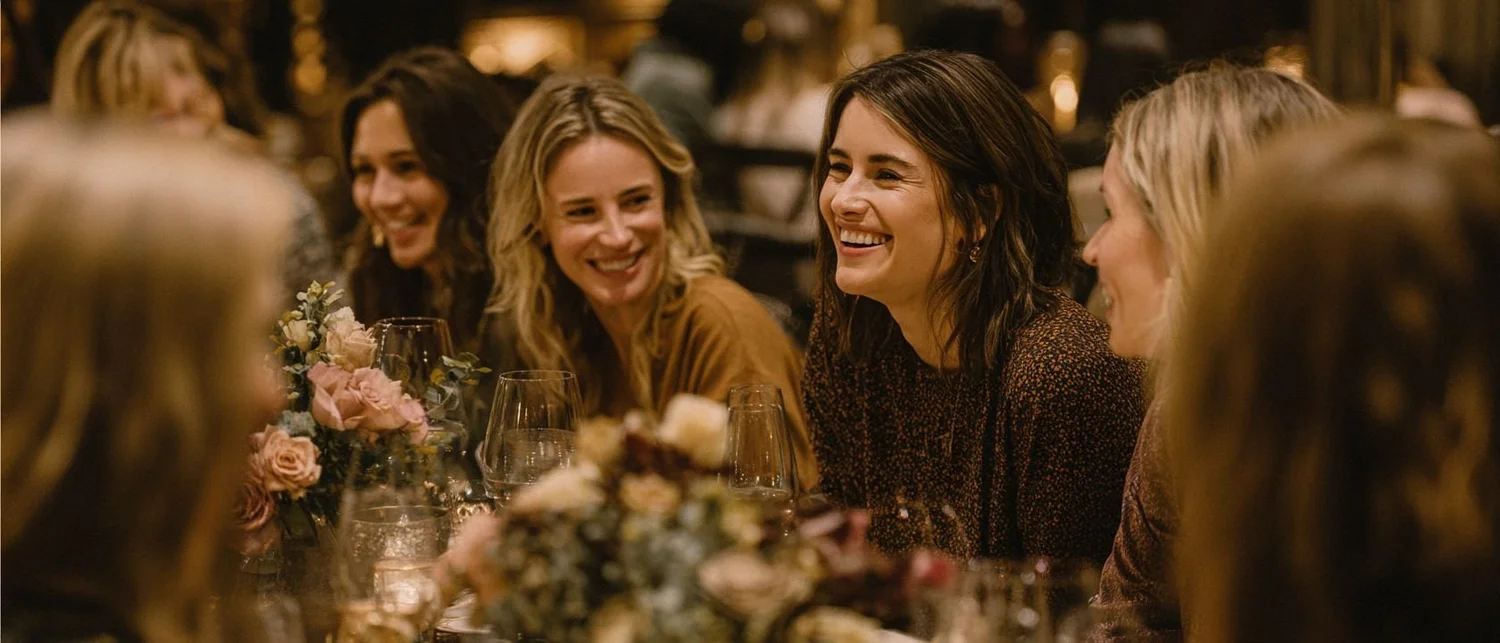
WHY A RESTAURANT
What a Restaurant Gives You That a Living Room Cannot
You get to be a guest at the event you planned
This is the single most important reason. When you host a shower at home or at a rented space, you spend the first hour setting up, the last hour cleaning, and the hours in between refilling glasses and managing the timeline. At a restaurant, you arrive 15 minutes early, confirm the table looks right, and sit down. The staff handles everything else. You are present for the toasts, the conversation, and the moments that matter. The guest of honor notices when the host is actually there instead of running back and forth to the kitchen.
The room does the decorating for you
A good private dining room already looks like something. Warm lighting, real tableware, interesting walls. You are not starting from a blank canvas and filling it with party store decorations. A few fresh flowers, a small dessert display, maybe place cards. That is all a restaurant private room needs to look intentional. The space does the heavy lifting. Your additions are accents, not architecture.
The food is handled
No catering orders. No warming trays. No running out of ice. No food sitting at room temperature for 90 minutes. A restaurant serves food fresh, on time, and at the right temperature. A prix fixe brunch or a family-style lunch means the host does not have to coordinate what 25 people are eating. Everyone gets something good. The kitchen handles dietary restrictions. The bar makes the drinks. You sit down.
The budget is clear
A food and beverage minimum at a restaurant gives you a total number to work with. Split it among the hosts and you know exactly what each person owes. Compare that to hosting at home, where the costs creep: catering, rentals, decorations, drinks, ice, plates, napkins, cleaning. Restaurant pricing is a single line. The food, the drinks, the room, the service, the cleanup. One number.
For a full breakdown of private event pricing, see our cost guide.
Planning a shower?
Tell us the type of celebration, the guest count, and the vibe you are going for. We will recommend restaurants with the right room, the right food, and the right light.
Tell us what you're planningTHE PLANNING GUIDE
How to Plan a Shower at a Restaurant, Step by Step
Lock the date before you lock the venue
The date is usually dictated by the milestone. Bridal showers happen 2 to 3 months before the wedding. Baby showers happen at 28 to 34 weeks. Coordinate with the guest of honor (or their partner, if it is a surprise) and the VIP guests (parents, bridal party) before you look at venues. Once the date is firm, you have your search window.
Set the budget and the split
Showers are almost always funded by a small group of hosts splitting the cost. Have the budget conversation early and openly. A realistic range for a restaurant shower is $50 to $120 per guest, depending on the city and the venue. For 20 guests, that is $1,000 to $2,400 total, split across 2 to 4 hosts. The food and beverage minimum at the venue will be your anchor number. Once you know it, the math is simple.
Choose the right time of day
Brunch (10 a.m. to 1 p.m.): The most popular shower format. Natural light fills the room. Mimosas and bellinis set the tone. The food is lighter and less expensive than dinner. Guests are fresh and energized. If the guest of honor is pregnant, a morning event before fatigue sets in is a kindness.
Afternoon tea or lunch (1 to 4 p.m.): A more relaxed pace. Works well for guests traveling from different areas who need a later start. The venue may have lower minimums for mid-afternoon than for peak brunch.
Cocktail hour or dinner (5 to 9 p.m.): The right call for a couples shower, a co-ed celebration, or a group where evening availability is better. The energy shifts from gentle and sunlit to lively and social. The menu can be more substantial. The bar program matters more.
Book 4 to 6 weeks ahead
Private rooms for Saturday and Sunday brunch fill quickly, especially at popular restaurants. A 4-week lead time is minimum. Six weeks is comfortable. If your shower falls in peak wedding season (April through June) or near the holidays, add more time. Tell the venue the event is a shower. They have hosted hundreds of them and will have suggestions you have not thought of.
Pick the right menu format
Prix fixe brunch is the workhorse. Two to three courses at a set price per person. Keeps the bill predictable, keeps service on schedule, and handles dietary needs in advance. Most venues will customize for vegetarian, vegan, or allergy requirements if you flag them a week out.
Family style works beautifully for showers because it creates a generous, communal table. Platters of food in the center. Everyone shares. It looks abundant without being excessive.
Individual ordering is the simplest for the host but the hardest to control on cost. If you go this route, ask the venue about a limited menu or a per-person cap. Otherwise the bill becomes unpredictable.
Handle the extras
Cake or dessert: Most restaurants allow an outside cake with a small plating fee ($2 to $5 per person). Ask in advance. If you prefer, the restaurant's pastry kitchen can often prepare something to order.
Flowers: A few small arrangements or a single centerpiece is all you need. The restaurant's table setting does the rest. Arrive 20 minutes early to place them.
Games and activities: If you are doing shower games, keep them at-the-table format. A private room is not a living room. There is no floor space for relay races. Print cards, trivia sheets, or bingo boards work. The table is your stage.
Gifts: Ask the venue if there is space for a gift table or a designated area. Some private rooms have a sideboard or console. If not, ask guests to send gifts to the guest of honor's home and bring cards only. This is increasingly common and saves logistical headaches for everyone.
IN PRACTICE
The hosts who have the best experience are the ones who tell us three things: the guest count, the vibe (relaxed brunch or lively dinner), and the neighborhood. We come back with 2 to 3 options and handle the booking. The host picks the one that feels right, confirms the menu, and shows up with flowers. That is the whole process.
THE PERSONAL TOUCHES
Small Things That Make People Cry (in a Good Way)
A welcome drink on arrival
When the guest of honor walks in and there is already a glass of something beautiful waiting at their seat, the tone is set. A signature cocktail, a champagne flute, or a mocktail if they are expecting. This takes one conversation with the venue and costs almost nothing extra. It says: we thought about you before you arrived.
Printed menus with the guest of honor's name
A simple card at each place setting that says "Brunch for Sarah" or "Celebrating Baby Torres" with the menu printed below. It costs you 20 minutes and a printer. The guest of honor will take one home. So will the grandmothers.
A photo moment that happens naturally
Choose a seat for the guest of honor where the light is best. If the room has a window wall, that is the backdrop. No ring light or photo booth needed. The table, the flowers, the natural light, and the group gathered around a good meal. That is the photo. It looks better than a living room with a balloon arch because it is real.
A toast, not a speech
Before the first course. Stand up. Say three sentences about why this person deserves a room full of people who love them. Raise a glass. Sit down. That is all a toast needs to be. It does not need to be rehearsed, clever, or long. It needs to be true.
An ending that is not abrupt
The worst showers end with a frantic cleanup. The best ones end with the last few guests lingering over coffee. A restaurant makes this easy. Dessert arrives, the pace slows, the conversation gets quieter and more personal. When people are ready to leave, they leave. Nobody is collecting trash bags.
COMMON QUESTIONS
Shower Planning FAQs
Make It Beautiful. Make It Easy.
Tell us who you are celebrating, how many people, and when. We will find restaurants with rooms that look like you spent weeks planning, even if you just started.
Tell us what you're planningReal people, not a chatbot. We respond fast.