Bachelor and bachelorette parties at a private venue.
A real planner's view of how to throw this kind of party without booking a strip club, a chain restaurant, or a house rental that ruins three friendships. The private venue approach is calmer, more considered, and dramatically better.
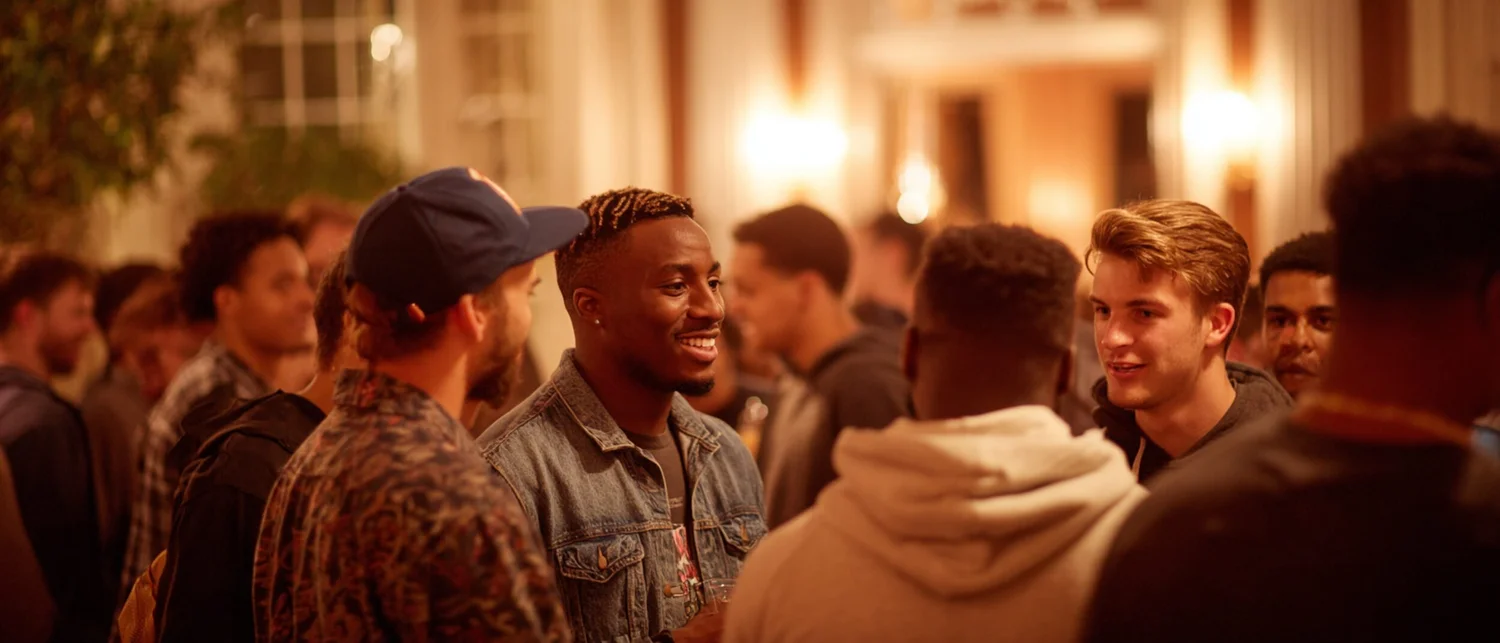
Why people are booking venues now.
Bachelor and bachelorette parties have grown up. The bar crawl model is exhausting, expensive, and rarely creates the night people remember. The house rental model puts a thirty-year-old in charge of host, chef, dishwasher, and damage deposit, which is not what they signed up for. The private venue model fixes both.
You get a room. You get a bar. You get someone else handling the food. You do not move six times in five hours. You do not clean anything. The cost ends up similar to what the group would have spent in scattered restaurants and Ubers, except now everyone is in the same place and the photos are all from the same room.
The single best thing a maid of honor or best man can do is reduce the number of locations to one. A private venue lets you do that.
The real budget by group size.
Smaller group (8 to 14 guests)
A private dining room or bar buyout for the night. Two-cocktail menu, light snacks, three to four hour window. Expect $1,200 to $3,500 depending on city, day of week, and venue. Per person this lands around $120 to $250, which is well under what the same group would spend across three dinner spots and two bars.
Mid-size group (15 to 25 guests)
A private event space or full restaurant section. Open bar or limited menu, passed canapés, light DJ if wanted. Expect $3,000 to $7,500. This is the sweet spot for most bachelorettes. The room feels full, the bill is reasonable per head, and the planning is contained to one phone call.
Large group (25 to 50+ guests)
Full venue buyout. Open bar, food stations or seated dinner, DJ, dance floor. Expect $5,000 to $15,000. At this size you need a venue, not a restaurant, because you need a private bar, private restrooms, and a room that will not be turned over to other guests at 10pm.
Once your group goes past 20, the per-person economics flip in favor of a venue buyout. Below 20, a private dining room is almost always the better deal.

What kind of night do you actually want?
The dinner-led night
Drinks at the venue from 7, dinner at 8, dancing or lounging from 10, end at midnight. Works for groups that want to actually talk to each other, exchange real moments, and not feel like they are being herded. Best for the bride or groom who values the people more than the chaos.
The cocktail-led night
Arrive at 8, cocktails and canapés flowing, music up by 9, dance floor by 10, end whenever. Works for bigger groups, energetic crowds, and groups where not everyone knows each other. The room never sits down, the energy never dips, and people get to circulate.
The activity-led night
The venue hosts a thing. A cocktail-making class. A wine tasting. A DJ workshop. A game night. The activity gives the evening shape and gives shy guests something to talk about. Works especially well for groups that have not all met before.
The five questions that change the night.
1. Is the bar staffed exclusively for your group?
If the venue's main bar is also serving you, drinks will take 15 minutes each on a busy night. A private event with a dedicated bartender is the difference between "I cannot get a drink" and "this is the best night ever."
2. Can the music get loud, or are you next to a residential building?
Some venues are gorgeous until 10pm, when the music has to come down because of a neighbor complaint clause in their lease. For a dance party, ask about decibel limits before you commit.
3. Is there a coat check, and is it staffed?
For a 25-person event in winter, an unstaffed coat pile becomes a problem at the end of the night. Either ask for a staffed coat check or know that someone in the group will need to babysit the pile.
4. What is the policy on outside cake or decor?
Most venues allow you to bring a cake. Many charge a cutting fee. Most allow simple decor. Many do not allow confetti, glitter, or anything that requires cleanup. Ask before you order the sash, the balloons, and the personalized banner.
5. What time does the room actually close?
Contracts often say "until midnight" but the venue's expectation is that guests are out by midnight, which means last call is at 11:30 and lights come up at 11:45. To peak at midnight, book the room until 1.

What the maid of honor or best man actually does.
The role of the planner is to make everyone else's night feel effortless. That means a clear venue, a clear time, a clear dress code, a clear cost, and clear directions. Six things on the invite. No surprises.
The thing that makes bachelor and bachelorette planning hard is the money conversation. When you split a venue buyout 12 ways, every guest needs to know upfront what they are paying. Not the day-of. Not at the end of the night. The week before. We have seen friendships fray because someone was not told the cost would be $180 a head until the moment they walked in.
Send the cost in writing. Do it the moment you confirm the venue. Anyone who cannot or will not pay gets to opt out without awkwardness. The night will be better because of it.
Looking for a venue that handles bachelorettes well?
The venues in our edit have hosted countless of these. We will match you with the right one inside one business day.
Tell Us What You're PlanningWhat hosts ask us most often.
How far in advance should we book?
Six to twelve weeks for most groups. Saturday nights book first and the best venues fill out two to three months ahead. For a major holiday weekend, book the moment you have a date, even without a final headcount.
Should we do a destination weekend or a one-night venue event?
Most groups are better off with a one-night venue event. Destination weekends are expensive, logistically painful, and require everyone to take time off work. They are worth it for very tight friend groups where everyone is in. They fall apart quickly in groups where one or two people are saying yes out of obligation.
Open bar or pay-as-you-go?
For a private event, open bar or a hosted limited menu is almost always the right call. It removes the awkwardness of guests pulling out cards, it speeds up service, and it stops the moment where one guest orders three cocktails and another orders one beer and feels weird about it.
Can we keep the cost down without making it feel cheap?
Yes. Three things. Pick a Friday or Sunday instead of Saturday. Pick a limited drink menu instead of a full open bar. Pick canapés instead of a seated dinner. Any one of these will save 25 to 40 percent. All three together can cut a $5,000 night down to $2,500 without anyone noticing.
What about people who do not drink?
Any good private venue can build a non-alcoholic menu that does not feel like an afterthought. Mocktails, alcohol-free spirits, beautiful sodas. Ask the venue specifically. If they say "we have orange juice," pick another venue.
Is it strange to have parents or in-laws at the event?
Not anymore. A growing number of bachelor and bachelorette parties now include a "first half" with the wider family followed by a "second half" with close friends. A private venue makes this easy because you can build a clean handoff into the room.
Tell us what you're planning.
One short form. A real person reads it. We come back inside one business day with venue options that fit the night you want.
Plan the Party