Private Events Guide
Semi-Private vs. Private Dining: What You Are Actually Booking
This is the distinction that trips up more event hosts than any pricing question. Here is what each option actually looks like, and when it matters.
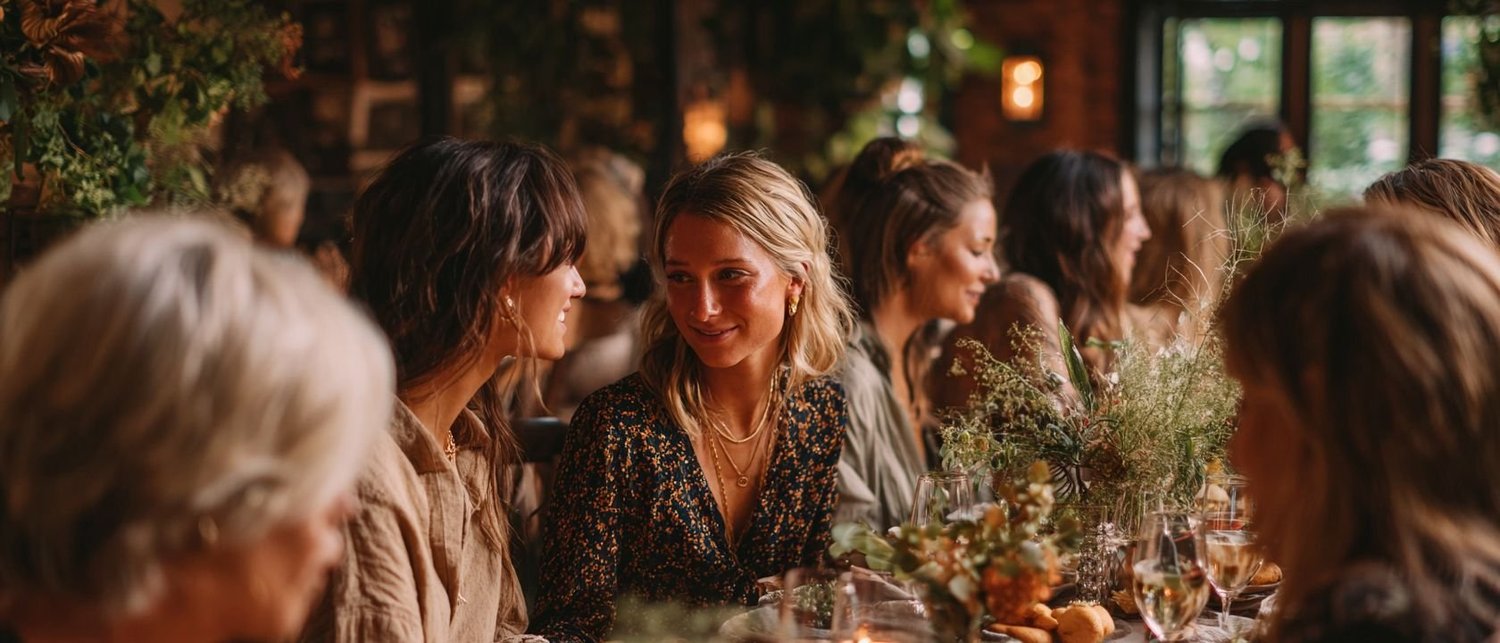
You search for "private dining," find a restaurant, inquire, and the response says the space is "semi-private." You are not sure what that means. You book it anyway. Then you show up for your rehearsal dinner and realize your "private" space is a roped-off section next to the bar, and every word of your father-in-law's toast competes with the Friday night crowd.
This happens constantly. Not because venues are misleading anyone, but because "private dining" means different things at different restaurants, and most hosts have never seen the full spectrum.
The Spectrum
Five Levels of Privacy at Restaurants
1. Reserved section in the main dining room
A long table or group of tables set aside in the main restaurant. No physical separation. You are dining alongside regular guests. Works for casual birthday dinners under 12 where atmosphere matters more than privacy. Does not work for speeches, presentations, or sensitive conversation.
2. Semi-private with a curtain or partition
A section separated by a curtain, bookshelf, half-wall, or sliding panel. You can see other diners. They can see you. Main room noise is muffled but present. This is the most common "semi-private" setup. Works well for team dinners, casual celebrations, and gatherings where restaurant energy is a feature, not a distraction.
3. Semi-private with architectural separation
A distinct alcove, mezzanine, or raised platform physically set apart from the main room but without a door. You have your own space with a defined boundary, but sound travels. Better than a curtain. Still not fully private. Works for most birthday and anniversary dinners, small corporate gatherings, and events where you want some restaurant energy without being in the middle of it.
4. Fully enclosed private room
Walls and a door. This is true private dining. You control the music, the lighting (usually), and the noise level. Toasts land the way they should. Presentations are audible. This is what you need for rehearsal dinners, memorial dinners, corporate events with a speaker, and any event where privacy is part of the experience.
5. Full venue buyout
The entire restaurant is yours. Every table, the bar, the patio, the kitchen's full attention. For weddings, large corporate events, and milestone celebrations over 60 guests. Higher minimums but total flexibility on layout, flow, music, and timing.
The test: if you need to give a toast, you need walls. If you need to give a presentation, you need a door.
How to Tell
Two Questions That Prevent the Wrong Booking
The photo test
Ask the venue for a photo of the actual setup during service, not an empty room at 2pm on a Tuesday. An empty room with the lights up looks spacious and quiet. That same room at 8pm on a Friday with 30 people and the main dining room at full volume is a completely different experience. If the venue cannot provide a photo during service, visit in person on a busy night.
The noise test
Ask the venue: "If someone gives a 3-minute toast, will every guest in the room hear them without raising their voice?" If the answer is not a confident yes, you are looking at a semi-private setup, regardless of what the listing says. For casual events, that might be fine. For anything with speeches, toasts, or a presentation, it is not.
The terminology varies by restaurant. Some call a curtained-off section "private dining." Others reserve that term exclusively for an enclosed room. With others you may snag a private patio or rooftop.The words on the website tell you very little. The questions above tell you everything.

Common Questions
Frequently Asked Questions
Is semi-private dining less expensive than a private room?
Usually, yes. Semi-private spaces often have lower food and beverage minimums because the venue is not dedicating an entire room to your group. The tradeoff is noise, visibility, and less control over the environment.
Can I make a semi-private space more private?
Some venues will add a curtain, screen, or panel. Ask what options they have. But adding a curtain does not add soundproofing. If noise is your concern, a curtain will not solve it.
How do I know if a listing means truly private?
Look for "enclosed," "dedicated room," or "private room with door." If the listing says "semi-private," "private area," or "private section," assume there is no door. When in doubt, ask directly: does this space have four walls and a door that closes?
What size group needs a fully private room?
Any group giving toasts, speeches, or presentations. Any group discussing sensitive business topics. Any event where the host has invested significantly and does not want background noise undermining it. For casual dinners where the restaurant vibe is part of the appeal, semi-private is often ideal.
Keep exploring
How Much Does a Private Event Cost? — Real pricing by city, group size, and format.
What to Ask Before Signing a Contract — The clauses that catch hosts off guard.
Private Dining in San Francisco — Neighborhood guide with privacy levels noted.
Not sure which level you need?
Tell us about your event and we will recommend spaces that match. We know the difference between what a venue calls private and what actually feels private.
Tell us what you're planningWe respond within one business day. Real people, not a chatbot.