Product launch events that actually launch the product.
A founder's view of how to run a product launch in a private venue. What to spend, what to skip, what venues hope you will not ask, and how to make the room work for the announcement instead of competing with it.
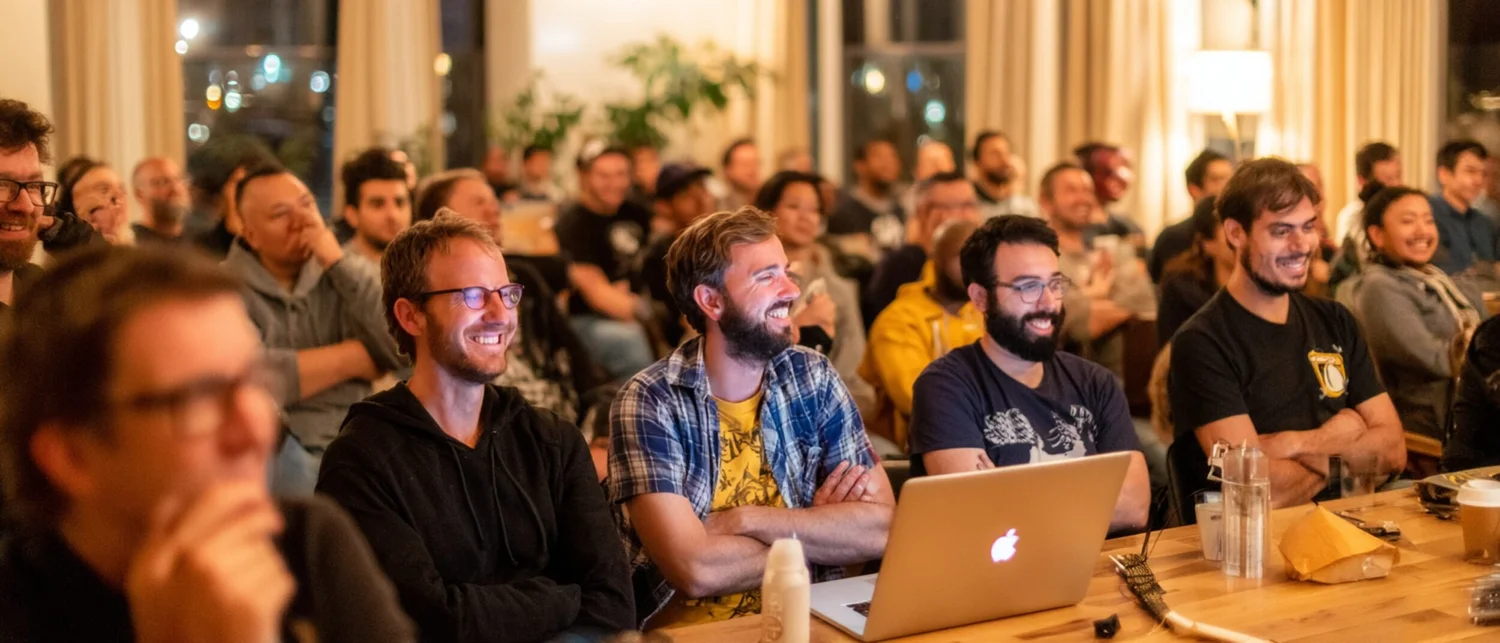
What a product launch is actually for.
A product launch event is not a press release in three dimensions. It is a forcing function. It gives the team a hard date, the customers a reason to come together, and the wider market a story that travels for weeks afterwards. The goal is not the event. The goal is what the event makes possible.
The best launches we have helped book all do one thing well. They make the audience feel like they were part of the moment, not the audience for it. The worst launches put the founder on a stage, run a 40-minute deck, and leave 80 people checking their phones in a dark room. Skip that version.
If your launch event has more slides than guests have moments to talk to each other, you have built a webinar with a bar tab.
The real budget by event type.
Intimate dinner launch (15 to 30 guests)
Private dining room, key customers, press, and investors. Plated dinner, structured conversation, no formal program. Expect $4,000 to $12,000 depending on city and venue. This is the format we match most B2B launches to when the audience matters more than the volume.
Cocktail launch (50 to 150 guests)
A gallery, a design-forward venue, or a private restaurant buyout. Open bar, passed canapés, a 15-minute on-stage moment, demo stations, networking time. Expect $8,000 to $30,000. This is the format that works for almost every consumer brand and most software launches.
Full activation (150 to 400 guests)
A real venue buyout. Multiple rooms, multiple touchpoints, branded environment, AV, video, demo wall. Expect $25,000 to $80,000+. This is for the launches where the event is also the marketing campaign. Done well, the content from the night becomes the content for the next quarter.
The single biggest waste of budget at most launch events is over-investing in production and under-investing in the guest experience. A great bar and warm food beats a 4K projector every time.

Three things every great launch event has.
1. A 12-minute moment, not a 40-minute program.
The on-stage segment should be short enough that no one wants to leave during it and long enough that the announcement lands. Twelve minutes is the right number. A founder welcome, a story about why this exists, the actual reveal, a customer or two on stage, then back to the room. Anything longer is a presentation. Anything shorter feels skipped.
2. A reason for guests to talk to each other.
The best launches have a built-in conversation starter. A demo wall guests can wander past. A photo moment that requires two people. A drink that arrives in waves so people refill at the same time. The job of the event is to give the audience an excuse to meet. Do not make them work for it.
3. A way for the night to become content.
A photographer, yes, but also a spot in the venue where the brand looks good in the background. Lighting that works for phones. A short video crew capturing audience reactions. The launch is the event. The footage is the campaign that runs for months afterwards.
The five questions that change the launch.
1. Can we fully brand the room?
"Branding allowed" can mean banners on stands, or it can mean projected logos, vinyl on the floor, custom napkins, and step-and-repeats. Different venues mean very different things. Get the answer in writing before you ship anything to the venue.
2. What is the AV reality, not the AV brochure?
Most venues will say "yes we have AV." That can mean a projector and a microphone, or it can mean a full-stack production system with a sound engineer. For a launch that needs reliable mics, music, video playback, and a click track for a demo, ask exactly what the venue provides and what you will need to bring in. The answer changes the budget by thousands.
3. Is there a load-in window the day-of?
For a launch with branded build, you need at least four hours of clean access to the room before doors. Many venues only give you two. Some only give you one. Find out before you sign.
4. Can guests park or arrive easily?
The easiest way to ruin a launch is to pick a beautiful venue with terrible logistics. If your guests have to circle for parking or walk through a sketchy block to get there, the energy of the room is set before they arrive. Ask about parking, drop-off, and the first impression of the entrance.
5. What happens if the schedule slips?
Launches run late. The CEO arrives late. The keynote runs long. The room turn happens slower than planned. Ask the venue what their flexibility looks like, especially around hard end-times. The good venues have heard this before and know how to flex. The wrong ones treat it as a contract violation.
The teams who launch in our venues.
The venues in our edit have hosted launches, board dinners, customer events, and brand activations for some of the most carefully built companies in tech, finance, and consumer brands. A few of the names you might recognize.
When to book and how the timeline runs.
A launch event needs longer lead time than most other private events because the venue is one of many moving parts. Twelve weeks out is the minimum for a 50-person launch. Sixteen to twenty weeks is the right window for anything over 100. The venues that handle launches well are also the venues that book first, so the earlier you start, the better the room.
Inside that window, the run of show looks like this. Venue locked at week 16. Save-the-dates at week 12. Formal invitations at week 8. RSVPs collected by week 4. Day-of run sheet finalized at week 2. Walk-through at week 1. Doors at hour zero. The teams that nail launches are the teams that protect this calendar from drift.
The day a launch event slips is the day someone tries to add another agenda item to the on-stage program. Hold the line on the 12-minute moment.
Looking for a venue that handles product launches properly?
The venues in our edit have hosted hundreds of launches. Our team will match you with the right one inside one business day.
Tell Us What You're LaunchingWhat founders ask us most often.
How much should we spend on the venue versus everything else?
For most launches, the venue should be 30 to 40 percent of the total event budget. Food and drink another 30 to 40 percent. Production, branding, and AV the rest. If the venue is eating more than half, you have overspent on the room. If it is eating less than 25 percent, you have underspent and the room will look like an afterthought.
Should we charge for tickets or make it free?
For a B2B launch, free. The audience is investing time, and that is the cost. For a consumer brand event with celebrity or experiential value, ticketed sometimes works because the friction filters the audience. For most launches, free is right and a clear RSVP system is the gatekeeper.
Do we need a publicist or PR partner?
Only if press attendance is the point. If you are inviting reporters, you need someone managing those relationships. If you are inviting customers, investors, and partners, you do not. The team that built the product can run the room.
Open bar all night, or limited?
For a two- to three-hour launch event, open bar with two cocktails plus wine and beer is the right answer. Saves money, speeds service, removes the awkward credit card moment. Anything longer and you start to need a more curated approach.
What if the room only fits 80 and we want to invite 120?
Send 120 invitations. Industry standard RSVP rate is 60 to 70 percent for free B2B launches. That math works. For an overflow concern, build a waitlist into the RSVP and you can manage it cleanly.
Should we record the event?
Yes, but record selectively. The 12-minute on-stage moment, yes. Audience reactions, yes. Customer interviews after the announcement, yes. Do not try to livestream the whole thing. The footage you edit afterwards will outperform the live broadcast every time.
Tell us what you're launching.
One short form. A real person on our team reads it. We come back inside one business day with venue options that fit the moment.
Plan the Launch